

Can you recreate the full UK cable TV feel while living in the United States? If you miss British channels, sports, or classic shows, you have options that use internet-first delivery instead of a traditional UK cable bundle.
This short guide explains how streaming services and modern channel platforms differ from Virgin TV and what to expect when you try to watch UK-style content abroad. Adoption is rising fast; analysts predict the industry could top $150B by 2028.
You’ll learn how these services stream live channels and on-demand content to common devices, which factors matter most, and who benefits most—like UK expats, travelers, and sports fans. I’ll also preview geo-restriction issues, why VPNs come up, and how to spot safer providers and secure payment practices.
For a practical comparison later, I’ll mention market examples and a straightforward option you can test with a trial at GetMaxTV.
Key Takeaways
- Replace a UK cable bundle with an internet-first setup you control.
- Compare Virgin TV Go vs streaming subscriptions on channels, on-demand, and devices.
- Ideal readers: UK expats in the US, frequent travelers, and sports fans.
- Evaluate channel variety, device compatibility, reliability, and support.
- Expect geo-restriction hurdles; VPNs help but outcomes vary.
- Look for licensed providers, secure payments, and realistic performance claims.
Why You’re Looking for a Virgin Media Alternative in the First Place
Many people switch because their bill no longer matches what they actually watch. Your cable package can include dozens of channels you never open. Long contracts and surprise fee hikes make that monthly cost feel unfair.
In 2025 the per month mindset is simple: you expect transparent pricing, cancel-anytime terms, and a clear value story. You want to know what you pay for each month and only keep it if it fits your routine.
Compare the old bundle model to streaming-first thinking. Cable packages sell lots of channels; streaming services earn your loyalty by delivering the shows and live events you watch most.
- Less friction: simpler setup and fewer contracts.
- More control: pause, resume, and switch screens without a set-top box.
- US-specific needs: access to international channels, reliable home streaming, and sports availability matter most.
Bottom line: you’re after predictable costs, real flexibility, and a service that earns your attention each month.
What IPTV Is and How It Works for Live TV and On-Demand Streaming
Instead of channels sent down coax or satellite, you get live channels and on‑demand libraries through apps that fetch video over the internet.
How delivery differs from cable
Cable and satellite broadcast fixed streams from a central tower or dish. Internet delivery uses adaptive streaming: the stream changes quality to match your connection.
This means fewer freezes on a good connection, and the same feed can reach phones, tablets, and smart TVs.
Core building blocks you’ll see
- Live channel lists: linear networks streamed in real time.
- VOD libraries: movies and shows you can start anytime.
- EPG (electronic program guide): schedules and program info inside the app.
What “catch‑up TV” actually does
Catch‑up lets you watch yesterday’s match or last night’s episode without recording it. The provider keeps recent programs in the VOD library for a short window.
Day to day, well-run services feel faster to navigate, searchable, and easier to share across devices. Your real experience depends on the provider’s infrastructure, app compatibility, and your home internet quality.
Virgin Media TV and Virgin TV Go: What You Actually Get
Think of the pay-TV bundle as the home base and the app as a portable add-on. The company’s offering centers on bundled television plus broadband. The streaming parts are meant to complement the core package rather than replace it.
How the bundle works
- The subscription combines live channels, on‑demand libraries, and broadband access.
- The companion app lets you watch subscribed channels on supported devices while inside the UK ecosystem.
- Customer support and set‑top features remain tied to the main home account.
Downloads versus true streaming
The app supports offline downloads of shows and movies when you are in the UK. Downloads let you watch while traveling if you prepare ahead.
However, geo‑licensing prevents live streaming outside UK borders in most cases. That means if you live in the United States, the app rarely gives daily, always‑on UK access.
| Feature | Home Bundle | Companion App |
|---|---|---|
| Live channel access | Full (in-home) | Yes, when in UK |
| Offline viewing | No | Yes (downloads) |
| Streaming abroad | Not applicable | Generally blocked by licensing |
Practical takeaway: if you want daily UK TV from the US, this setup is rarely seamless. Many people pick an internet-first streaming service when multi-device, always‑on access matters most.
IPTV vs Virgin Media: Content Choice and Channel Coverage
Content choice is more than a channel count. You need to know whether the networks you value are stable, available in your region, and supported during big events.
Global networks and local channels
Some streaming catalogs mix BBC, NBC, Sky Sports, ESPN, and beIN Sports alongside local stations. That gives you broader world coverage in one place.
What to check: confirm licensing for the channels you want and ask about uptime during peak hours.
Sports access and major events
Sports often drive your choice. Dedicated sports networks and event rights matter more than a long channel list.
Realistic note: even a strong service can struggle if many users tune in at once. Your home connection and the provider’s servers both matter.
Movies, shows, and discovery
Bundles tied to regional licensing tend to present curated movie and show libraries. Catalog-style services can have deeper VOD sections, but quality varies.
Look for reliable search, categories, and recent additions so you can actually find the movies and shows you want.
Practical checklist to judge coverage before you buy:
- List must-have leagues, channels, and languages.
- Verify live event reliability and peak performance.
- Test VOD discovery and recent movie titles.
- Confirm device support and legal licensing.
| Coverage area | Licensed UK bundle | Global catalog service |
|---|---|---|
| Local UK channels | Strong in-home access | Often available but varied |
| Major sports networks | Tied to specific rights | Wide mix; check event rights |
| VOD depth (movies & shows) | Curated, consistent | Potentially deeper, inconsistent |
| Peak-event reliability | High within network limits | Depends on provider capacity |
If you want a single test option that shows how a global catalog can work, try a trial or read a practical review at IPTV trends and streaming guide.
iptv virgin media alternative: The Real Differences That Matter Day to Day
Day-to-day differences often come down to how fast you can start watching and how much control you keep over the setup. Your first hour with a new streaming option tells you a lot.
Setup friction and time to start streaming
Plug-and-play boxes usually mean a technician visit or hardware tied to your home account. That can be slower, but the box often handles EPG and recordings for you.
By contrast, an internet-first provider can let you install an app and sign in within minutes. That speed depends on the provider’s onboarding and whether your chosen device is supported.
Contracts vs subscription flexibility
Contracts lock you into long terms and fees if you change your mind. Month-to-month services let you test without penalties and switch plans when your viewing habits change.
Choose month plans if you want low commitment while you test peak-time performance and channel reliability.
Where each option can disappoint (and how to avoid it)
Common issues: travel or geo-blocks with the traditional app, and inconsistent channel lists or weak support with low-cost online sellers.
Prevent problems by insisting on a trial, testing during peak sports hours, verifying device compatibility, and checking refund and support policies before you pay for a full month.
| Day-one task | Traditional box | Streaming provider |
|---|---|---|
| Time to start | Hours to days (setup & activation) | Minutes (app install & sign-in) |
| Billing flexibility | Contract-based | Month-to-month options |
| Likely disappointments | Travel limits, hidden fees | Channel inconsistency, weak support |
| Prevention steps | Check contract fine print | Use trial and test peak-time streams |
Pricing Comparison: Monthly Cost, Plans, and What You Pay For
Picking the right plan starts with understanding how providers quote price and what sits behind each offer.
Compare like a pro: normalize any multi‑month deal to a per month number first. Then check what’s included: live channels, VOD, EPG, catch‑up, and how many simultaneous devices are allowed.
Typical pricing examples from 2025 market data
Here are real 2025 examples to show how plan length changes effective price.
| Provider | Plan length | Listed price | Effective per month |
|---|---|---|---|
| XtremeHD | 3 months | $25 | $8.33 per month |
| XtremeHD | 6 months | $40 | $6.67 per month |
| AlfaIPTV | 3 months | $29 | $9.67 per month |
| AlfaIPTV | 12 months | $59 | $4.92 per month |
What “months free” promos can mean
Many promos advertise several months free but require a long commitment. Read renewal terms carefully.
“A free period rarely means no cost later — check the renewal price and cancellation window.”
If a plan promises months free, confirm what happens after the promo ends and whether you must cancel before an auto‑renew date.
Total cost of ownership: hardware, apps, and internet
Beyond subscription price, add the cost of a streaming stick or box, any paid app subscriptions, and a broadband plan that supports HD or 4K.
Payment tips: prefer official checkout flows and trusted methods like credit card or PayPal to reduce risk.
Try first: use a short trial or test a month during peak hours before committing to a longer plan. For a practical trial option and more pricing context, see this short guide at affordable streaming options.
Device Compatibility: Smart TVs, Streaming Sticks, Phones, and PCs
Before you buy, check which devices the service actually supports and how well the app runs on each screen. The best channel lineup is useless if the apps crash or lack features on your hardware.
Smart TVs and Fire TV-style devices
What to check: confirm the app is available in your smart tvs app store and that it works with your remote. Look for a remote-friendly interface, stable playback during long sessions, and frequent app updates.
iOS, Android, and on-the-go viewing
Your phone or tablet should let you log in quickly and resume playback. Test data use and battery drain on short trips. If you plan to watch while traveling, check download or low‑data modes.
Apps and platform support to look for
Good apps include an EPG, favorites, search, catch-up, buffering controls, and easy playlist management. These features save time and reduce frustration when you hunt for live events or shows.
Household reality check: verify how many simultaneous connections the service allows. Count your devices and choose a plan that matches your number of users and device mix to avoid bottlenecks.
For a quick guide on the best streaming sticks and smart tvs to consider, see this short list of the best streaming devices.
Streams, Connections, and Performance: Buffering, 4K, and Reliability
Performance is what turns a working stream into a pleasant viewing session. You want low buffering, crisp 4K when available, and consistent connections when many users tune in at once.
Why server infrastructure matters
Content delivery networks (CDNs), regional nodes, and load balancing shape whether your connection stays steady. A provider that uses a 10 Gbps backbone and AI-assisted load balancing can route your streams away from congestion during prime time.
Adaptive bitrate streaming and unstable Wi‑Fi
Adaptive bitrate adjusts quality automatically when your internet fluctuates. That means fewer pauses and smoother playback on flaky Wi‑Fi.
Instead of stopping, the stream drops resolution a bit so the content keeps playing while your router or device regains speed.
What “uptime” really means
Claims like >99.9% uptime sound good, but test them during stress moments—sports finals or weekend prime time. Uptime should reflect consistent performance, not just background availability.
Sanity checks you can run
- Request a short trial and test multiple streams at night and on weekends.
- Check performance across your devices and apps, including phones and smart TVs.
- Try several simultaneous connections to mirror your household usage.
Remember: your router, Wi‑Fi placement, and device decoding power also affect results. Good support matters because many fixes require both app tweaks and network adjustments.
For a hands-on trial and more provider comparisons, see this short review at a UK provider comparison.
Internet Requirements in the United States: Speed, Coverage, and Home Setup
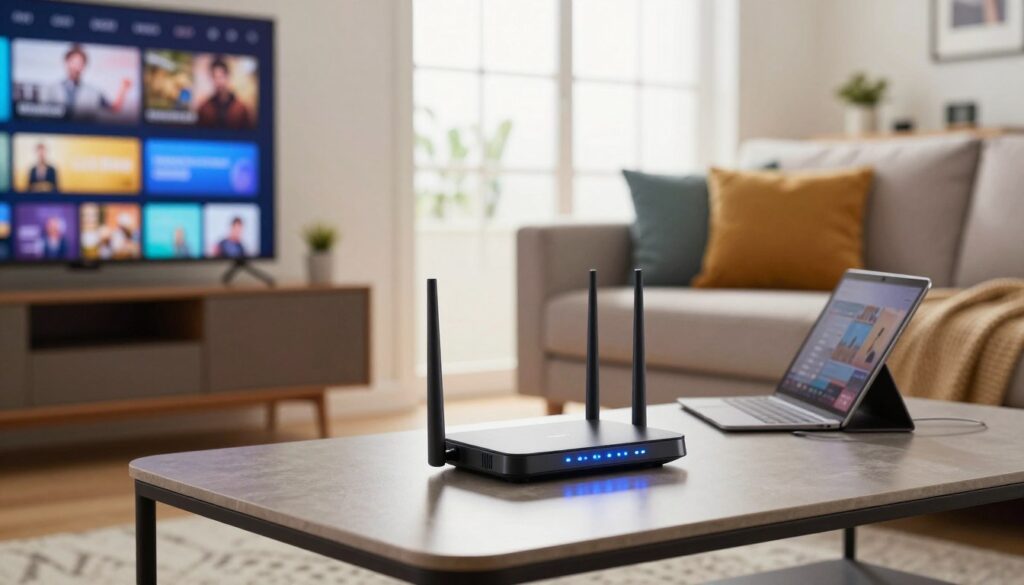
Plan your bandwidth around who watches and when, not just headline Mbps on your bill. Think about how many people stream at once and whether you want HD or 4K. A single 4K stream needs around 25 Mbps, while HD usually uses 5–8 Mbps.
Quick planning tip: add up simultaneous streams. If two TVs plus phones stream in HD, aim for 50–75 Mbps to keep things smooth.
Router placement and reducing Wi‑Fi interference
Place your router centrally and high in the home. Walls, floors, and large appliances block signal and cause buffering.
Avoid placing the router near microwaves, cordless phones, or dense metal objects. These common interference sources are often why your connection feels slow even when the provider reports good speed.
Wired vs wireless: when to use Ethernet
Whenever possible, use wired Ethernet for your main TV device. A direct cable cuts out Wi‑Fi variability and gives steadier access for live sports and big events.
- Wired devices: best for 4K and multi-hour live events.
- Wireless devices: fine for casual HD if the router is strong and close.
- Older TVs and budget sticks may struggle with apps, so device quality matters as much as your internet.
Final note: reliable streaming comes from balanced planning—speed, router placement, and the quality of your devices and apps. Test during peak hours and try a wired connection before blaming the provider. For a step-by-step setup guide, see the complete setup tutorial.
Security, Privacy, and Payment Safety When Choosing an IPTV Provider
Security matters because you’ll install apps, enter logins, and pay online—so small mistakes can expose your accounts and devices.
Before you buy, pause and confirm who you’re dealing with. Many low-quality sellers operate through informal channels and offer no clear refund path.
Red flags to watch for
- Cloned or misspelled sites that mimic real brands.
- No refund policy, only private messaging or social accounts for contact.
- Sellers insisting on irreversible payment methods or asking you to message random numbers.
- Reviews that sound generic or only praise price without setup details.
Better signals of a safer service
Prefer providers with clear pricing, published terms, and official checkout flows. Look for verifiable support: email, ticketing, or live chat and stated business hours.
| Risk | Red flag | Better signal |
|---|---|---|
| Trust | Unknown social account sales | Branded site with contact email and ticket system |
| Payments | Only crypto or irreversible transfers | Credit card or PayPal with dispute options |
| Support | No documented response time | Published support hours and real chat/email |
| Reputation | Fresh domain, no setup reviews | Older domain, setup guides, and consistent customer reviews |
Practical safety checklist
- Verify domain age and consistent branding before you buy.
- Prefer reversible payment methods and check refund terms.
- Use strong, unique passwords and enable device updates.
- Avoid installing unknown APKs from untrusted sources.
- Keep minimal account info on hand and log out on shared devices.
“A clear refund policy and reachable support say a lot about a service’s trustworthiness.”
Geo-Restrictions and Travel: What Happens When You Try to Watch Virgin Media Abroad
Travel and streaming don’t always mix well. Rights holders grant viewing permissions by territory, so services that work inside the UK often refuse live streaming outside its borders. That licensing reality means your account alone usually won’t grant you full access while you’re in the United States.
Why the app is UK-only
Licenses for channels and live events are negotiated by region. Providers restrict streaming to the UK to comply with those deals. You can often use offline downloads you made while in the UK, but live playback is usually blocked abroad.
VPN basics and what they do
A VPN can give your device a UK IP address and encrypt your connection, which improves privacy and can help with access. Popular VPNs often tested for UK streaming include NordVPN, Surfshark, ExpressVPN, CyberGhost, and PrivateVPN.
Limits and realistic expectations
Streaming platforms actively block many VPNs. A tool that worked last month may be blocked today. That’s why “it works for me” claims change over time. Expect to try multiple UK server locations, update apps, clear cookies, and test on another device if playback fails.
Practical steps
- Try different UK server cities if one is blocked.
- Update the streaming app and the VPN client before testing.
- Clear browser cookies or app cache to remove location traces.
- Have a backup plan: downloaded shows for travel or a dedicated streaming service that offers stable US access.
Bottom line: if you want reliable day-to-day access from the US, consider a service designed for international users rather than relying on workarounds that may fail. For a guide on local channel access via an internet-first setup, see local channel access.
Customer Support Showdown: 24/7 Help, Setup Assistance, and Troubleshooting

When support matters most—like before kickoff or during a setup hiccup—you want answers fast and clear.
Customer support is a true differentiator. Fast, practical help keeps a big game night from turning into a long troubleshooting session.
What good support looks like
Good support includes live chat or ticketed email, WhatsApp-style messaging for quick setup steps, and clear setup guides that match your device.
Look for step-by-step troubleshooting, proven activation help, and staff who ask about your device, network, and app version. That saves time and avoids repeated instructions.
Questions to ask before you pay
- Which devices are officially supported and do you offer setup assistance for each one?
- How many simultaneous connections can my account use?
- Is an EPG and catch-up included, and how are outages handled?
- What are the trial terms, refund policy, and contact steps if activation fails?
| Claim | Real check | Why it matters |
|---|---|---|
| 24/7 customer support | Ask for typical response time and test during peak hours | Fast replies prevent long outages before big events |
| WhatsApp/email help | Send a setup question before subscribing | Shows whether staff can solve device-specific issues |
| Refunds & trials | Request exact trial length and cancellation steps | Protects you if the service or support is weak |
Reality check: many providers advertise 24/7 customer support, but actual response times vary. Do a quick support test in the trial window: send a setup question and note how fast and how well they resolve it.
“A fast, helpful reply before you pay is one of the best predictors of long-term value.”
For more comparisons and to gauge support promises across vendors, see a short list of top options at top service reviews. Test support first, then commit to a longer plan.
How to Choose the Best IPTV Service Provider in 2025
Choosing a provider begins with reliability checks, not the biggest channel count. Start by listing the content you watch most: specific UK channels, leagues, and on‑demand shows. That list drives every later decision.
Reliability and verified uptime
Validate uptime during a trial. Test peak hours, a live sporting event, and a long evening stream.
Ask support how they report outages and what compensation, if any, they offer for extended downtime.
Channel coverage and content priorities
Score providers by content, not by total channels. Put leagues and networks you care about at the top.
Confirm licensing and recent event coverage before you commit to any plan.
Device limits, multi-device connections, and household sharing
Check how many concurrent connections the service allows. Match that to your household devices.
Confirm apps work on the smart TVs and streaming sticks you own.
Trial options, refund policies, and safe testing
Use short trials to test apps, connection, and support response. Prefer providers with a clear refund policy and official checkout.
Security matters: avoid unofficial APKs and use reversible payment methods when possible.
| Step | What to test | Why it matters |
|---|---|---|
| Reliability | Peak-hour live stream, support response time | Shows true uptime and service support |
| Coverage | Must-have channels and event rights | Ensures you get the content you watch |
| Devices & connections | Apps on your TV, phone, and simultaneous streams | Avoids device limits that block household use |
| Trial & refunds | Short trial, refund terms, payment method | Safe way to evaluate without long commitment |
“Judge value by the content you use and how stable it is, not by the lowest price.”
Quick checklist: must-have channels, trial during peak time, device test, support reply time, clear refund terms, and secure payment. Use this checklist when you compare providers in the market snapshot that follows.
IPTV Provider Snapshot: What Leading Services Offer (Market Examples)
Quick market view: a glance at what leading providers claim helps you compare features that matter for daily use.
XtremeHD
Performance-focused: 20,000+ live channels and 60,000 VOD titles. The service advertises 4K/Full HD streams, a worldwide CDN, a 10 Gbps backbone, and AI-assisted load balancing to reduce buffering.
Claims include adaptive bitrate, catch-up plus a dynamic EPG, latency under 100 ms, and >99.9% uptime. Pricing examples: 3 months $25, 6 months $40. 24/7 support and multiple payment methods are listed.
AlfaIPTV
Everyday usability: 15,000+ live channels and 40,000 VOD titles with multilingual menus (English, French, Spanish, Italian).
Technical approach: secure EU/NA servers with nearest-node routing and adaptive streaming. Features include catch-up, EPG, instant activation, and WhatsApp/email support. Pricing examples: 3 months $29, 12 months $59 with referenced refund options.
What to compare side-by-side:
- Coverage: must-have networks and language options.
- Features: catch-up quality, EPG accuracy, and allowed connections.
- Support: response time and setup help.
- Pricing: normalize to a per month cost and check trial terms.
“The best choice is the one that reliably delivers your priority content, not the one with the biggest headline numbers.”
Where GetMaxTV Fits If You Want a Straightforward IPTV Streaming Service
If you prefer fast setup and a focused channel list, GetMaxTV is one of the services worth comparing. It targets customers who want clear plans, quick activation, and predictable access without heavy setup or long contracts.
Think of it as a practical test you can run: choose a short plan, install apps on your main devices, and judge support response during a trial month.
What to compare in GetMaxTV’s plans: pricing, device support, and content fit
Cost and plan structure: check the total price, how many months are included, and renewal terms. Convert multi-month deals to a per month number so you can compare fairly.
Devices and apps: confirm which platforms and streaming devices are supported. Make sure the apps run well on your smart TV, streaming stick, and phone before you commit.
Connections and content: verify how many simultaneous connections you need and whether the channel list contains your must-have networks and catch-up options.
| Compare | What to check | Why it matters | Practical tip |
|---|---|---|---|
| Price & plans | Monthly cost, promo length, renewal | True monthly cost and commitment | Normalize to per month and test a short plan |
| Devices & apps | Smart TV, stick, iOS/Android, PC | App stability and platform support | Install and test apps before buying |
| Connections & content | Simultaneous streams, channel list, VOD | Avoid household clashes during peak use | Match plan to your typical viewing load |
| Support | Customer support options and response time | Helps resolve setup issues and outages | Send a test question during the trial |
Customer support can be as valuable as channel count. If you’re new to this way of watching TV, expect helpful setup guides and reachable support to shorten the learning curve.
Ready to compare? Review the offer and subscription options at GetMaxTV IPTV subscription options to see how their plans match your household and internet setup.
Conclusion
Conclusion
To wrap up, focus on what matters most: steady streaming, the channels you actually watch, and clear support you can reach when it matters.
Key takeaway: a UK-tied cable bundle offers in-home stability but limited travel access, while internet-first services give broader content and flexible plans you can test quickly.
Judge any service by reliability, channel coverage, device and app support, peak-hour performance, and real customer help. Protect yourself: prefer secure payment flows, strong passwords, and a clear refund policy.
Try a sensible approach: pick one plan length that matches your risk tolerance, run a one-month trial, then scale only if the service stays stable at home.
Ready to test a legal option? Check GetMaxTV at https://getmaxtv.com for plan details and a trial.
FAQ
What makes a streaming service a good Virgin Media alternative for cord cutters?
You want low monthly cost, flexible subscriptions (no long contracts), wide device support for smart TVs and streaming sticks, reliable streams with minimal buffering, plus clear customer support. Check pricing, channel lists, trial options, and whether the provider offers apps for your TV, phone, or Fire TV device.
How much should I expect to pay per month in 2025?
Typical streaming plans range from budget bundles under per month to full-featured packages from –. Premium sports or movie add‑ons can push costs higher. Always factor in any months‑free promos, hardware needs, and your home internet cost when calculating the real monthly price.
Which devices work best for these services?
Look for apps compatible with major smart TV platforms (Samsung Tizen, LG webOS), Fire TV, Roku, Android TV/Google TV, iOS and Android phones, and Windows or macOS browsers. Streaming sticks and set‑top Android boxes give you broad compatibility and easy updates.
Do these services offer live channels and on‑demand libraries?
Yes. Most providers mix live channel lineups with VOD libraries and electronic program guides (EPGs). The library depth varies: some focus on international channels, others on sports or movies, so compare content lists carefully.
How do sports broadcasts and major events work on these platforms?
Sports access depends on rights and included networks. Some services carry dedicated sports channels and pay‑per‑view windows; others rely on regional feeds. If you follow live sports, verify which leagues and channels are included before you subscribe.
What internet speed do I need for HD and 4K streaming?
For stable HD streams, plan for at least 5–8 Mbps per stream. For 4K, aim for 25 Mbps or more per stream. Remember to account for other devices on your network and use adaptive bitrate streaming when Wi‑Fi is less stable.
How many simultaneous connections are typical per account?
Providers commonly allow 2–4 simultaneous streams, though some plans support more. Check device limits and household sharing rules to avoid playback interruptions when multiple users watch at once.
Are there security or privacy risks with third‑party streaming services?
Yes. Avoid unverified sellers and suspicious payment methods. Prefer providers with transparent pricing, SSL checkout, clear refund policies, and responsive customer support channels like chat or email. Using official apps reduces risk compared with installing risky third‑party packages.
Can I watch UK‑only services while traveling abroad?
Many UK services restrict access due to licensing. Some users try VPNs to appear in the UK, but streaming platforms often block VPN traffic. Always check terms of service and be aware of potential access limits when traveling.
What customer support should you expect?
Good providers offer clear setup guides, fast email or chat support, and helpful troubleshooting for device setup and stream issues. Look for services advertising 24/7 support or fast response times and read customer reviews for real‑world experiences.
How do trial periods and “months free” promotions actually work?
Trials let you test service and device compatibility; months‑free promos often require entering payment details and auto‑renew at full price. Read cancellation rules and trial length closely to avoid surprise charges when the promotion ends.
What are the hidden costs beyond the monthly fee?
Consider router upgrades, streaming sticks or set‑top boxes, subscription add‑ons for premium channels, higher internet tiers for 4K, and any setup or activation fees. Add these into your total cost of ownership before you decide.
How can you verify a provider’s uptime and stream quality?
Check independent reviews, user forums, and performance tests. Providers that disclose CDN partners, server locations, and uptime guarantees are more trustworthy. Trial the service during peak hours to see real performance in your home.
What should you ask support before subscribing?
Ask about device compatibility, simultaneous stream limits, refund policy, trial length, payment security, and how they handle outages. Clear, responsive answers indicate a provider that stands behind its service.
How do I choose the best service for my household?
Prioritize the channels and VOD you watch most, confirm device support, set a monthly budget, and use trials to test reliability. Consider multi‑device connections, verified uptime, and transparent pricing when comparing options.
The GetMaxTV Blog Team is a group of IPTV technology writers and cord-cutting researchers who have been reviewing streaming services since 2023. We publish independent device setup guides, troubleshooting articles, and honest service comparisons. Every tutorial on this blog is tested on real devices — Fire Stick 4K Max, Roku Ultra, Samsung Smart TV, Apple TV 4K, and Android phones. We verify every step before publishing and update our content quarterly.